
Most ready-to-wear clothing brands in Nigeria remain relatively unknown and struggling, not because there’s no demand, but because many entrepreneurs jump in without a clear strategy, or an understanding of how the market really works.
In this article, you will learn what a ready-to-wear clothing brand is and how to start one in Nigeria.
If you have plans to start a Ready-to-Wear clothing brand in Nigeria, then you should read this article to the end so that you can avoid mistakes other entrepreneurs in this space have made.
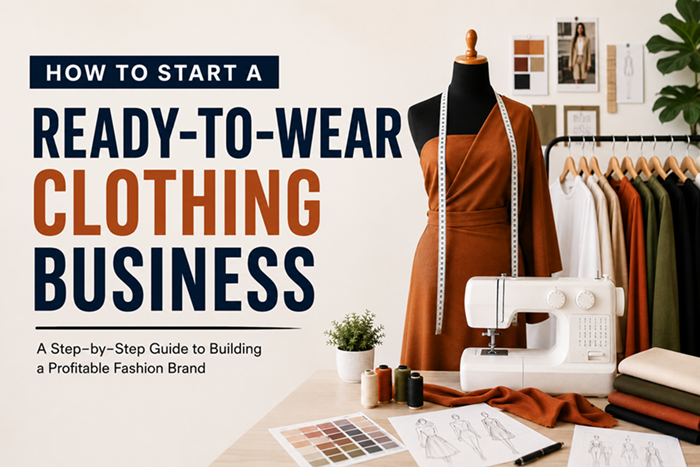
Table of Contents
What’s a Ready to Wear (RTW) Clothing Brand?
Perhaps you are hearing the term for the first time. Ready-to-wear, also known as RTW, are clothing brands that design and produce garments in standardized sizes that are manufactured in bulk, put on display, and sold directly to customers. You walk in, pick your size, make payments and leave with your clothes. That is the entire experience.
Those clothes you buy at a boutique are clothes made by ready to wear fashion brands. In Nigeria, we also call these types of clothes ready-made clothes.
Why Ready to Wear Clothes?
Compared to bespoke or custom-made clothes, ready-to-wear clothes are easier to produce and sell.
As an RTW brand, you can produce one design in batches and sell to customers all over the world.
For customers, they do not have to visit a tailor, choose a fabric, take measurements, wait weeks for production, or worry about whether the finished outfit will look exactly as they expected.
How to start a Ready to Wear Clothing Brand
Define your target audience
What type of people will wear your clothes?
Are you targeting young women, men, children, working professionals, students, or a combination of these groups? What is their age range, income level, lifestyle, and fashion preference?
Are they looking for affordable everyday clothing, trendy outfits, corporate wear, native wear, or premium fashion?
These are the questions you should answer before you start production. Your target audience will influence almost every decision you make, from the type of clothes you sell and the price you charge to your branding and marketing strategy.
If you are starting this business with limited funds, we highly suggest you pick a specific audience instead of trying to target everyone.
Also, the audience you pick might intersect with other audiences. For example, if you target young female professionals, your clothes may also appeal to female university students or business owners. This means, while your main target audience are young female professionals, sales may also come from people who fall outside your initial audience.
Defining a target audience does not mean that only these types of people will buy your clothes. Rather, it helps you focus your products and marketing efforts on the people most likely to become your customers, while still allowing you to serve other customers who find value in your products.
Get your tools and equipment
The type of tools and equipment you’ll need depends largely on how much you are investing into the business.
Are you starting on a small scale and opting for manual or basic sewing machines, or do you have enough capital to invest in industrial machines and other equipment that can increase your production capacity?
If you are starting small, some of the equipment you may need include sewing machines, overlock machines, cutting tables, measuring tapes, scissors, pressing irons, and other sewing accessories.
For entrepreneurs starting big, investing in industrial sewing machines and other professional equipment will be a better option. These machines are designed for higher production volumes and can help improve the quality of your clothing.
However, you should consider the type of clothing you plan to produce before purchasing equipment. Different machines are designed for different functions, so buying equipment without understanding your production requirements can lead to unnecessary expenses.
If you are unsure of what to get, speak with an experienced fashion consultant, designer, or clothing manufacturer before making major equipment purchases.
Set Up Your Production Facility
This is where your clothes will be produced, where your staff will work, and where most of your day-to-day production activities will take place.
Your production facility does not need to be in a highbrow area. In fact, situating your production facility in a less expensive area will help reduce costs and lower the overall price of your clothes.
What matters is that the location provides enough space for your production activities, is reasonably accessible to your staff, and has reliable electricity, security and other basic amenities you need to operate efficiently.
Your production facility should be different from where the finished clothes will be displayed.
Register your Business
The next step is to register your ready-to-wear clothing business with the Corporate Affairs Commission (CAC). A business registration gives your business legal recognition and helps establish you as a legitimate business owner.
Operating a business in Nigeria without the appropriate registration can expose you to regulatory and legal problems, especially as your business grows.
Registering your RTW business also enables you to open a business bank account, build credibility with customers and suppliers, enter into formal business agreements, and apply for loans or grants when the opportunity arises.
We recommend you register as a limited liability company (LTD) rather than a business name. Registering as a LTD company makes it easier for you to access loans and bring in investors. If you need help with a name you can register, check out the GrowthPal business name generator to get ideas.
GrowthPal makes business registration easy and fast. To register your business, send a message to GrowthPal on WhatsApp or visit our business registration page, select business type and make payment.
After your payment has been received, we will contact you to request the necessary information and documents required to process your registration. We will then handle the registration process and keep you updated until your business is successfully registered.
Register your Trademark
A trademark gives you the legal right to protect the distinctive elements that identify your clothing brand, such as your brand name, logo, slogan or other unique marks. This is particularly important for a ready-to-wear business because your brand identity can become one of your most valuable assets as the business grows.
Registering your trademark helps prevent other businesses from using a confusingly similar brand name or identity for related goods and services. It also gives you greater control over how your brand is used and can make it easier to take action if someone infringes on your trademark.
You do not necessarily have to wait until your clothing business becomes successful before registering a trademark. If you have chosen a brand name you intend to build around, registering it early can help protect the investment you make in building recognition and customer loyalty around that name.
Also note that your brand name, which is the name you trademark, can be different from your registered business name. For example, you could register your business with the CAC as Sharparrels LTD while operating your clothing brand under the name INVOGUE, which you can separately register as a trademark.
This allows you to operate multiple brands or products under one registered company while protecting the individual brand names you build in the market.
Contact GrowthPal to start your trademark registration today.
Start Production
Once you have your target audience, production facility, equipment and other requirements in place, it is time to start producing your clothes.
Begin by sourcing the fabrics, zippers, buttons, and other materials required for your designs.
Do not rush into producing large quantities, especially if you are just starting. Start with a small batch of carefully selected designs and sizes. This allows you to test how customers respond to your products without tying up too much money in inventory.
Before production begins, make sure you have clear designs, measurements and specifications for each piece. Your tailors or production staff should understand exactly how each garment should be made to ensure consistency across different pieces.
As the clothes are produced, pay close attention to quality. Check the stitching, measurements, finishing, fabric quality and overall appearance before the clothes are packaged for sale.
Once production is complete and the clothes have passed your quality checks, you can package them, take product photographs and prepare them for sale through your chosen sales channels.
Hiring your First Staffs
In this section, we assume that you are starting this ready-to-wear fashion brand with lean capital, so you may not be able to afford a large team from the beginning. This means you need to be strategic about the people you hire and the roles they will perform.
Your first hires should be people who directly contribute to production and sales. You will need a tailor or sewing operator, an assistant to help with cutting and finishing, and someone to handle sales, customer service or order fulfilment.
You do not necessarily have to employ everyone on a full-time basis. For example, you can work with freelance tailors or pay workers per piece produced while your business is still growing. This can help you keep your fixed costs low and allow you to increase your workforce as your production volume increases.
As the business owner, you may also have to handle some responsibilities yourself in the beginning, including marketing, purchasing materials, managing finances and supervising production. The goal is not to build a large team immediately, but to have the right people handling the tasks you cannot efficiently manage on your own.
As your sales and production increase, you can gradually hire more specialised staff and create clearly defined roles within the business.
Marketing your Ready-to-Wear Clothing Business
There is no business without sales, hence marketing should be one of your priorities from the moment you start your ready-to-wear clothing business. It is not enough to produce good-quality clothes; people need to know that your brand exists, and have a reason to buy from you.
This section covers how to get sales for your ready-to-wear clothing business.
Partner With Fashion Stores
Fashion stores with an established customer base can be an easy way to sell your ready-to-wear clothes without having to build your own physical store. Instead of waiting for customers to discover your brand, you can leverage the existing traffic and customer relationships of fashion retailers.
Look for fashion stores whose customers match your target audience. If you produce affordable women’s clothing for young professionals, focus on stores that already serve this demographic.
You can approach these stores and propose different types of partnerships. One option is wholesale, where the store purchases your clothes at an agreed price and resells them at a higher price. Another option is consignment, where you supply the clothes and the store pays you after they are sold.
Before entering into an agreement, discuss important details such as pricing, payment terms, delivery, returns, how damaged or unsold items will be handled. Put the terms in writing so both parties understand their responsibilities.
Get a Website
Getting a website for your ready-to-wear fashion business can be optional but we highly recommend it if;
- You plan to run paid ads for your business.
- You have plans for Search Engine Optimisation.
- You will follow up on messages/leads from your website.
- You will update your website with your latest outfits.
- You will include your website on promotional materials.
If you are not ready to do any of these things at the moment, then you shouldn’t get a website yet.
Of what use is a website to a ready-to-wear brand?
A website puts your business on the globe. Customers from any part of the world can find your website by searching on Google or researching through AI. They can browse through a collection of your clothes, place orders online and make payment.
Imagine a fashion store owner in Tanzania searching online for new ready-to-wear suppliers and coming across your website. That is a valuable opportunity for your business. They could become a wholesale customer, stock your clothes in their store and introduce your brand to an entirely new market.
A website can also make your brand look more established and credible. Instead of sending potential customers a collection of pictures through WhatsApp every time they want to see your products, you can direct them to your website where they can browse your products in an organised and professional manner.
However, for your website to bring meaningful results, you need to actually do the things listed above. A website sitting online without traffic, fresh content, marketing or follow-up will not magically generate sales.
Run Paid Advertising
Paid advertising on Facebook, Instagram, YouTube and other platforms will help you reach potential customers beyond your existing followers and grow your ready-to-wear clothing brand faster.
Start with a budget you can afford and target people based on factors such as location, age, interests, shopping behaviour and fashion preferences. Use high-quality photos and videos that showcase your products, also include a clear call to action.
Note: Have a monthly budget for marketing your business, no matter how small. One of the most common mistakes new RTW brand owners make is treating marketing as an occasional expense.
Now, Go Build Your Brand
Starting a ready-to-wear clothing brand in Nigeria is not a simple endeavour, but it is far from impossible. Everything covered in this article is groundwork. It is not glamorous, but it is what makes the difference between a brand that struggles through its first year and one that builds genuine momentum.
Do not skip the fundamentals in your rush to launch.
Start small if you have to, but start smart. Learn as you go, and be willing to adjust when something is not working. The Nigerian fashion industry has room for more strong, well-run ready-to-wear brands, and yours could be one of them.

